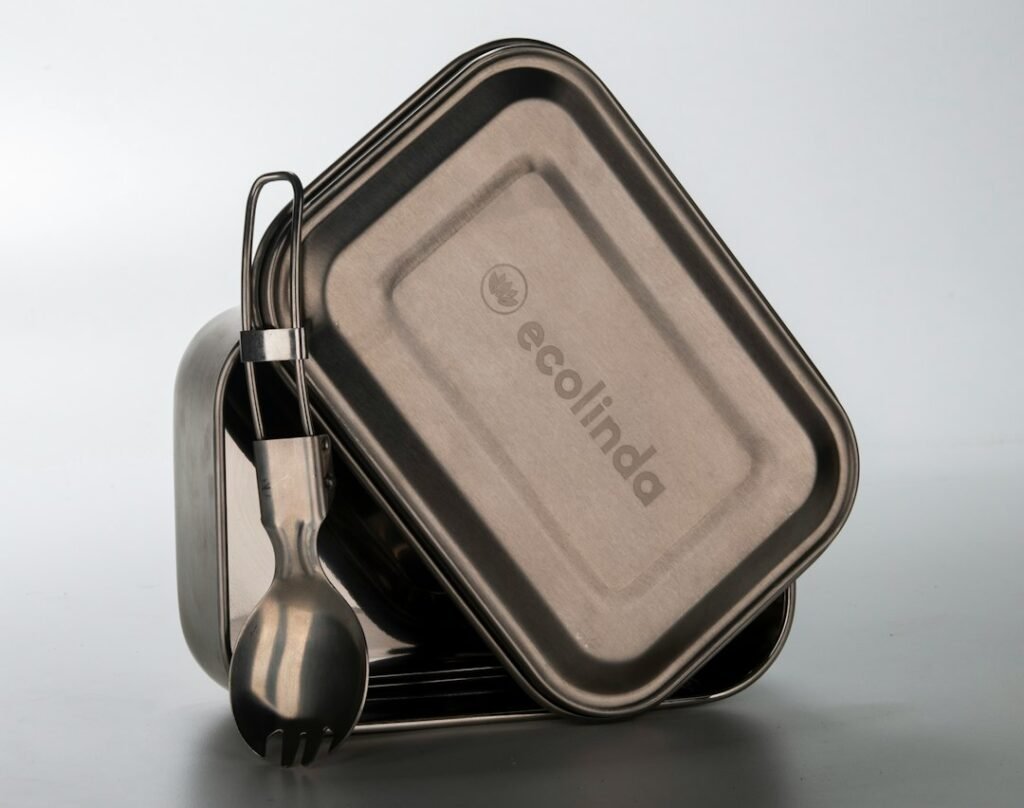
Updated September 2026
Amazon affiliate disclosure: KitchenFitly is a participant in the Amazon Services LLC Associates Program. As an Amazon Associate, we earn from qualifying purchases. This does not affect our recommendations.
Editorial note: This comparison focuses on the removable food container—not the appliance’s outer housing. We evaluated everyday durability, cleaning, weight, heat transfer, odor retention, leak design, and replacement practicality. Material alone does not establish that a lunch box is safe, leakproof, or suitable for a particular voltage.
For most buyers, a stainless steel electric lunch box is the better long-term choice because its removable food tray resists staining, odors, and scratching better than a typical plastic tray. A plastic food container can still be preferable when low weight, microwave compatibility, or a lower purchase cost matters most—but only if the manufacturer explicitly permits the intended heating method.
The best compromise is often a food-grade stainless steel inner tray inside an insulated plastic outer shell. The metal contacts the meal, while the exterior keeps the unit lighter and easier to carry. However, lid seals, wattage, voltage, and food-safety habits matter at least as much as the tray material.
Fast decision
- Choose a stainless steel inner tray for curries, tomato sauces, oily meals, frequent use, and easier odor control.
- Choose a manufacturer-approved plastic container when minimum weight or direct microwave reheating is essential.
- Choose removable containers in either material. A fixed bowl is harder to wash without exposing electrical parts to water.
- Do not choose by “BPA-free” alone. Also verify heating instructions, temperature limits, voltage, certifications, and replacement-part availability.
Stainless steel vs plastic: quick comparison
| Factor | Stainless steel tray | Plastic tray |
|---|---|---|
| Odor and stain resistance | Usually better | More likely to retain strong colors or smells over time |
| Scratch resistance | Generally durable, though it can dent | Can scratch if cleaned with abrasive tools |
| Weight | Heavier | Lighter |
| Microwave use | Never place metal in a microwave | Only if explicitly labeled microwave-safe and used as directed |
| Heat transfer in the appliance | Usually conducts heat efficiently | Depends heavily on product design and permitted temperature |
| Drop behavior | May dent but is unlikely to shatter | May crack, warp, or break at latches |
| Best for | Daily commuters, truck drivers, curry and sauce-based meals | Light carrying and manufacturer-approved microwave workflows |
Why stainless steel is usually the better food tray
It handles staining foods better
Tomato sauce, turmeric, chili oil, and curry can discolor some plastics. Stainless steel is nonporous and generally easier to return to a neutral appearance. That makes it especially useful for workers who rotate rice, stew, pasta, and strongly seasoned meals throughout the week.
It is less prone to retaining odors
Smell often remains not in the steel tray but in the silicone gasket or plastic lid. Even so, a stainless food well usually gives you fewer odor-retention surfaces. Remove and clean the gasket only as the manufacturer directs, and let all components dry fully before reassembly.
It tolerates frequent utensil contact
A metal spoon or fork can visibly scratch a plastic bowl. Stainless steel can also mark, but it is generally more suitable for repeated workplace use. Avoid harsh scouring pads because a deeply scratched surface in either material becomes harder to clean.
It transfers heat efficiently
Metal conducts heat well from the appliance’s heating plate into the food container. Actual heating speed still depends on wattage, meal density, starting temperature, portion size, lid design, and ambient conditions. A steel tray does not guarantee fast heating by itself.
When a plastic container makes more sense
You carry it a long distance
Plastic can reduce bag weight, which matters for students, public-transport commuters, and workers carrying tools or laptops. Compare the complete product weight, not the tray alone; heavy power cords and insulated shells can erase the difference.
You need a microwave option
A stainless tray must never go into a microwave. Some plastic containers are designed for microwave use after being removed from the electrical base, but you must confirm this in the current manual or on the container. “Food safe,” “BPA-free,” and “microwave safe” are not interchangeable claims.
You want inexpensive replaceable compartments
Plastic dividers and small containers can be inexpensive, but replacement availability varies. Before buying, search the manufacturer’s support page for the exact tray, lid, gasket, and power cable. A cheap unit becomes wasteful when a broken latch cannot be replaced.
What does BPA-free actually tell you?
“BPA-free” means the manufacturer says the item does not contain bisphenol A. It does not tell you whether the plastic is appropriate for every temperature, dishwasher cycle, microwave setting, oily food, or duration of heating. Follow the product-specific instructions and replace any container that is warped, cracked, heavily scratched, or no longer seals correctly.
Also separate the food container from the appliance body in your evaluation. Many products described as stainless steel still use a plastic exterior and plastic lid. That is normal; what matters is knowing which surfaces contact food and how each part may be cleaned.
Heating performance: material is only one variable
Electric lunch boxes generally warm already-cooked food rather than functioning like high-powered microwave ovens. Thick foods heat more slowly than soups; frozen centers take longer than refrigerated portions; and a packed container heats less evenly than a loosely filled one.
Stirring partway through—when the manual permits it—can reduce cold spots. Our guide to electric lunch-box heating time explains the main variables and why a single advertised time should not be treated as a guarantee.
Food-safety rules apply to both materials
Neither stainless steel nor plastic makes unsafe storage safe. Keep perishable food cold until heating unless a validated insulated method maintains a safe temperature. When reheating leftovers, U.S. food-safety guidance uses 165°F (74°C) as the target internal temperature. Check the center and thickest areas with a food thermometer rather than judging only by steam.
- Refrigerate cooked food promptly and transport it with appropriate cold packs when needed.
- Do not leave meat, dairy, rice, or other perishables at room temperature for extended periods.
- Stir food when allowed and verify the center temperature.
- Wash the food tray, lid, gasket, and utensils after use according to the manual.
- Never immerse the powered base, plug, or cord unless the manufacturer explicitly designs a component for immersion.
An electric lunch box that cannot bring your portion to a safe serving temperature within your available break schedule is the wrong size or power level for that meal, regardless of its tray material.
Leakproof claims depend on the lid, not the tray
Leaks usually occur at the gasket, steam vent, latch, or lid edge. Stainless steel does not make a product automatically leakproof. Look for a replaceable gasket, secure latches, clear instructions about closing the steam vent, and an upright carrying requirement.
Soup and thin curry are more demanding than rice or pasta. Even with a well-sealed model, transport the lunch box upright inside a secondary washable bag until you have tested it at home.
Vehicle users: verify voltage before material
For a car or light truck, the correct electrical input is more important than the inner tray. A 12V passenger-vehicle outlet and a 24V commercial-truck system are not interchangeable merely because the connector fits. Read our 12V vs. 24V electric lunch-box guide before buying.
Truck drivers can also use our truck-driver buying guide, while jobsite users should compare durability and power access in our construction-worker picks.
Seven checks before purchasing
- Food-contact material: identify the tray, lid, dividers, and gasket materials separately.
- Removability: confirm the food tray lifts out for washing.
- Cleaning instructions: check which parts are dishwasher-safe and which require hand washing.
- Power source: verify 110/120V wall power, 12V vehicle power, 24V power, or a documented combination.
- Capacity: choose a portion size you can heat evenly and finish.
- Seal design: inspect latch, vent, gasket, and upright-transport instructions.
- Replacement parts: look for trays, lids, gaskets, and cords for the exact model.
For product selection, start with our best electric lunch box for work. If portability is the priority, compare cordless vs. plug-in electric lunch boxes.
our guide to the best electric lunch boxes
Cleaning without damaging the lunch box
- Unplug the appliance and let it cool.
- Remove the tray and every manufacturer-approved removable component.
- Wash with the recommended detergent and a nonabrasive sponge.
- Clean gasket channels and corners where sauce can collect.
- Wipe—not immerse—the electrical base unless instructions state otherwise.
- Dry parts completely before closing the lid for storage.
If plastic retains odor, do not apply unapproved solvents or extreme heat. If stainless steel shows discoloration, follow the manual instead of using steel wool. Improvised cleaning can damage seals, coatings, or temperature markings.
Affiliate links: as an Amazon Associate, KitchenFitly earns from qualifying purchases. Models come from our research-based guides; check the exact listing and manual before buying.
- Cordless: LunchEAZE Core. Removable 304 stainless-steel container, listed as dishwasher-safe. Check it on Amazon →
- Plug-in: Crock-Pot GO. Stainless inner container, detachable cord, plug-in heating. Check it on Amazon →
More options: best electric lunch box for work.
Frequently asked questions
Is stainless steel safer than plastic for an electric lunch box?
Material name alone cannot prove overall safety. Stainless steel avoids concerns about heating a plastic food bowl and is durable, but the complete appliance must still be correctly designed and used. With plastic, follow the stated heat, microwave, and dishwasher limits exactly.
Can a stainless steel lunch-box tray go in the microwave?
No. Do not place stainless steel or other metal in a microwave. Transfer food to a microwave-safe container if the manufacturer’s workflow requires microwave reheating.
Why does my plastic lunch box smell like curry?
Spices and oils can be absorbed by scratched plastic or remain in the gasket and lid channels. Clean promptly, inspect removable seals, dry fully, and replace damaged components with manufacturer-approved parts.
Does stainless steel heat food faster?
It transfers heat efficiently, but total heating time depends more broadly on appliance wattage, contact with the heating plate, food quantity, density, starting temperature, and ambient conditions.
Can I cook raw meat in an electric lunch box?
Do not assume a food warmer can safely cook raw meat. Use the appliance only for functions explicitly documented by the manufacturer, and verify safe internal temperatures with a food thermometer.
Bottom line
Choose a stainless steel electric lunch box for frequent use, strongly colored foods, better odor resistance, and a durable removable tray. Choose plastic when low carrying weight or a specifically approved microwave workflow is more important.
The smarter buying sequence is: verify power compatibility, heating performance, removable parts, seal design, and cleaning instructions—then choose the food-container material. A stainless tray is our default recommendation, but a well-documented plastic model is better than a poorly supported metal one.
Sources and further reading
- FoodSafety.gov: Safe minimum internal temperatures
- USDA FSIS: Leftovers and food safety
- FDA: Food-contact substances
Featured photo by Maher M Raoof on Unsplash.
Pingback: How to Clean an Electric Lunch Box Safely
Pingback: Electric Lunch Box vs Insulated Food Jar
Pingback: Are Electric Lunch Boxes Safe? What to Know