You can use a mini food processor for small batches of chopped vegetables, minced herbs, textured sauces, dips, and other tasks explicitly supported by your model. It is most useful when preparing ingredients for one or two people—not when trying to make a small chopping bowl perform every job of a full-size processor or blender.
Start with the manual’s ingredient list, batch limits, and operating instructions. Retail terms such as “mini processor” and “chopper” are not a guarantee of identical capabilities. Check the actual blade, controls, and accessories.
This guide offers meal-planning ideas and practical selection advice. It is not a collection of recipes tested in every mini processor, and it does not replace the manufacturer’s instructions.
Affiliate disclosure: As an Amazon Associate, we earn from qualifying purchases. Some shopping links below are affiliate links.
Mini food processor uses at a glance
| Task to investigate | Useful result | Important check |
|---|---|---|
| Chopping recipe vegetables | Small pieces for a meal | Permitted ingredients and starting piece size. |
| Mincing herbs or aromatics | A prepared component for cooking | Minimum quantity and desired texture. |
| Making a textured sauce | Coarse rather than completely smooth mixture | Recipe compatibility and liquid limits. |
| Preparing a dip | A small batch for a meal or snack | Mixture thickness and operating limits. |
| Mixing a dressing | Combined liquid ingredients | Approved method and maximum liquid fill. |
| Chopping nuts | Pieces for a topping | Explicit permission; chopping is not nut-butter making. |
| Slicing or shredding | Uniform slices or shreds | A suitable attachment, not just a chopping blade. |
These are tasks to check against your appliance, not universal promises. If the manual does not support a job, choose another suitable tool or ask the manufacturer.
Start with the jobs your manufacturer actually lists
Hamilton Beach lists chopping vegetables and nuts, mincing herbs, and preparing hummus and dressings among uses of its Stack & Press 3 Cup Chopper. Those examples establish intended uses for that model, not every compact appliance.
Cuisinart’s Mini-Prep Plus product information illustrates another compact processor format with its own controls and specifications. Use the documentation for your exact model when deciding which ingredients and processing methods to try.
Build your first few meals around supported tasks. This is more reliable than starting with a social-media recipe that assumes a different bowl, blade, or motor. Keep the model number handy when searching for instructions or replacement parts.
1. Prepare ingredients for a small dinner
The simplest way to use a mini processor is as a prep assistant for an existing meal. Choose a recipe you already cook, identify a chopping task the manual supports, and process only that component. You do not need to make the entire meal in the appliance.
Before starting, decide the finished size you want. Ingredients intended to remain visible in a dish need a different result from ingredients intended to form a fine base. Follow the model’s control instructions and inspect the result rather than running the motor for an arbitrary time.
Keep ingredients separate when they require different textures or are added to the meal at different stages. Combining everything in one bowl may save a washing step but remove the control that made the processor useful in the first place.
2. Make a small sauce or dip component
Choose a manufacturer-approved recipe or a recipe that clearly matches the appliance’s documented capabilities. Plan the quantity around the permitted batch, including any liquid limit.
Think about how you will serve the result. A textured topping and a smooth, pourable sauce are different goals. If the appliance cannot produce the intended result within its instructions, use another tool instead of adding excessive liquid or extending the run time.
Prepare a serving container before starting, so you can transfer the finished mixture safely using the recommended method. Do not scrape around a moving blade or reach into the bowl with your fingers.
3. Prepare a topping separately
A supported chopping task can produce a component you add at the end of a meal. Keep the topping separate until serving if that suits the recipe. This lets you adjust each portion without preparing a larger batch of the whole dish.
For nuts or other firm ingredients, verify explicit permission, quantity, and processing instructions. Permission to make chopped pieces does not establish permission to grind a powder or process a thick paste.
If someone eating the meal has an allergy, choose appropriate ingredients and prevent cross-contact. Do not assume a quick wipe makes previously used equipment suitable. Follow the appliance’s cleaning instructions and the precautions relevant to the person’s allergy.
4. Support a flexible meal plan
A small processor can be useful even when you cook different meals during the week. Identify the prep step that repeats, rather than trying to process all your food in advance.
For example, your plan might include a chopped component for dinner, a small sauce for another meal, and a topping prepared just before serving. These are workflow examples, not tested recipes or storage recommendations.
Use safe food-handling and storage guidance for each ingredient and finished dish. Processing does not cook food, preserve it, or make it safe to keep at room temperature. Do not invent a common storage period for every mixture you prepare.
How much should you put in the bowl?
The capacity printed on a box is not permission to fill the bowl to the brim for every task. Check maximum fill marks, separate liquid limits, and any ingredient-specific batch guidance.
Also check whether a very small quantity is suitable. An amount that works with a knife may not be enough for the appliance’s intended processing method. Do not double a recipe solely to justify using the processor if that creates food you do not need.
For a larger meal, decide whether several permitted batches are practical. Include the time needed to unload and reload. If the batch plan becomes cumbersome, a larger suitable appliance or a manual tool may be the better choice.
Never overfill to avoid a second load. Stop at the stated operating limits, and follow instructions about pauses or cooling between runs.
A safe first-use routine
- Read the manual: confirm the task, ingredient preparation, batch size, assembly, and controls.
- Prepare your workspace: use the permitted surface and placement, with ingredients and a receiving container nearby.
- Load as instructed: respect fill limits and do not put in unapproved hard, frozen, or hot ingredients.
- Process using the approved controls: keep hands and utensils out of the bowl while operating.
- Stop safely before checking or scraping: follow the manual’s power-disconnection and blade-handling directions.
- Clean and dry the permitted parts: store the appliance and sharp components safely.
Do not bypass lid locks or other interlocks. If the unit will not operate, troubleshoot using its instructions rather than holding parts in an improvised position.
Tasks that need a different tool—or explicit approval
Uniform slicing and shredding
A chopping blade does not automatically provide these results. Check for the appropriate included accessory. If it is absent, investigate a suitable processor, grater, or other tool for the job.
Daily smoothies
If drinks are your main goal, compare a suitable blender rather than assuming the mini processor is the right format. See mini food processor vs blender for a task-based decision.
Ice, hard spices, dough, and nut butter
These are separate capability questions. Do not infer permission from motor wattage, a sharp-looking blade, or a product name. Look for explicit instructions for the specific task and quantity.
Hot mixtures
Use hot ingredients only if the manufacturer permits the intended method. Follow temperature, fill, lid, and processing instructions. Do not assume a bowl suitable for a cold dip is suitable for a steaming mixture.
When a knife is still the smarter choice
A mini processor is not automatically convenient for every tiny prep job. If you need a few precise pieces, already have a chopping board out, and would otherwise wash several appliance parts, a knife may be simpler.
Compare the full sequence: retrieve the appliance, assemble it, prepare ingredients, process, transfer, wash, dry, and store. The motor’s run time is only one part of that sequence.
A useful buying rule is to identify two or three recurring supported jobs before ordering. If you cannot name them, delay the purchase. Owning a compact appliance is not the same as having a practical use for it.
Cleaning and storage in a small kitchen
Disconnect power and disassemble only as directed. Handle cutting components carefully, and never leave sharp parts hidden in a bowl of washing water. Check dishwasher permission separately for each part.
The motor base is not a washable food container. Do not immerse it or rinse it under a tap. Follow its exterior-cleaning directions and keep electrical connections dry.
Give washed parts enough room to dry before storing them. Include that space when deciding whether the appliance fits your kitchen. Store blades and accessories so someone reaching into the cupboard will not encounter an exposed edge.
Keep the manual accessible and note the exact model for replacement parts. A similar-looking bowl or blade is not necessarily compatible.
Choosing a model around these uses
Start with your normal meals, then compare documented tasks, usable batch size, controls, cleaning, and storage. Measure assembled height and footprint, and include all accessories.
Our mini food processor guide for small kitchens can help build a shortlist. You can also read our guide to the best mini food processors. Not every model supports every task above. Check the exact manual and included parts before buying.
Frequently asked questions
Can a mini food processor make a whole meal?
Think of it primarily as a tool for supported preparation steps. It does not replace cooking equipment or make raw ingredients safe to eat.
Can it make a small dip?
Some models support appropriate dips. Check a compatible recipe, batch limits, and mixture instructions rather than assuming every dip is suitable.
Can I put all the ingredients in together?
Only when the recipe and appliance instructions support that method. Separate ingredients when their required textures or preparation steps differ.
Is a mini processor worth it for one person?
It can be if it solves recurring prep tasks in useful quantities. Include setup, washing, drying, and storage in your decision.
Bottom line
Use a mini processor for the small, supported prep jobs that recur in your meals. Start with one familiar recipe component, respect the manual’s limits, and choose another tool when the task calls for a different result. A modest appliance used regularly is more valuable than a versatile-sounding one that stays in the cupboard.
Deciding between a powered unit and a hand tool? See mini food processor vs manual chopper.
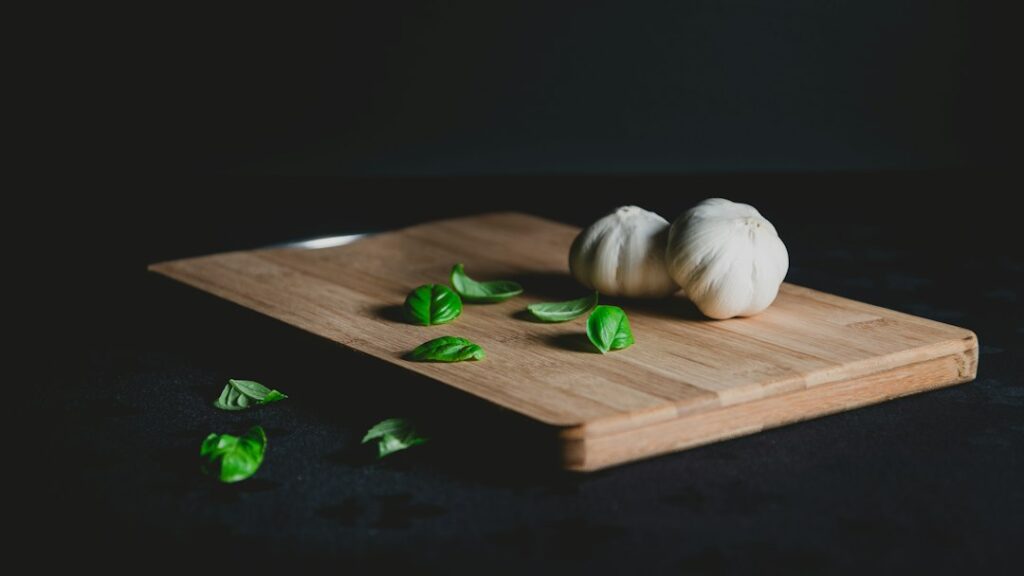
Illustrative garlic and basil photo by Sébastien Marchand on Unsplash. It is not a photograph of our product testing.
Pingback: How to Clean a Mini Food Processor Safely
Pingback: Best Mini Food Processor for a Small Kitchen | KitchenFitly