Choose a mini food processor if your main jobs are chopping small quantities of vegetables, mincing herbs, or making textured dips. Choose a blender if you mainly want smoothies, shakes, and liquid-based mixtures. For a small kitchen, the better purchase is the appliance that matches the tasks you repeat—not the one with the longest list of possible uses.
There is overlap, especially with sauces and purées, but the exact model matters. A compact chopper is not automatically a full-size food processor, and a personal blender is not automatically suitable for hot soup, dry grinding, or heavy mixtures.
This is a task-based buying guide informed by manufacturer information, not a hands-on comparison test. Check the manual and specifications for the exact appliance before buying or trying a new recipe.
Affiliate disclosure: As an Amazon Associate, we earn from qualifying purchases. Some shopping links below are affiliate links.
Mini food processor vs blender: the quick decision
| Your main need | Start by considering | Check before buying |
|---|---|---|
| Small batches of chopped onion, herbs, or recipe ingredients | Mini processor or chopper | Permitted ingredients, batch size, and pulse control. |
| A smoothie or protein shake for one person | Personal blender | Usable cup capacity, ingredient instructions, and travel lid. |
| Textured salsa or a small dip | Mini processor or chopper | Minimum batch and the recipe’s desired texture. |
| Smooth, pourable mixtures | Blender | Liquid requirements and permitted ingredients. |
| Uniform slices or shredded vegetables | Processor with the appropriate disc | Actual included attachments; a basic mini chopper may not do this. |
| Hot soup | Only an appliance explicitly approved for hot ingredients | Temperature, capacity, lid, and operating instructions. |
| Occasional tiny amounts of prep | Your existing knife or manual tool | Whether an electrical appliance would save meaningful effort. |
Use the table as a shortlist, not a performance guarantee. An appliance’s permitted tasks take priority over a general category comparison.
What counts as a mini food processor?
Retail descriptions use “mini processor,” “food chopper,” and “mini chopper” somewhat loosely. Look at the actual bowl, blade, controls, and attachments rather than relying on the label.
For example, Hamilton Beach describes its Stack & Press 3 Cup Chopper as a compact appliance for chopping, puréeing, and emulsifying. Cuisinart’s Mini-Prep Plus product page is another useful example of a small processor format. These examples help illustrate the category; they are not results from our own kitchen tests.
A chopping blade breaks ingredients into smaller pieces. That does not mean it produces the same result as a dedicated slicing or shredding disc. If your real goal is evenly sliced cucumber or shredded cabbage, verify the required attachment instead of assuming a mini bowl can perform the task.
For small households, the attraction is a manageable batch: enough ingredients for a meal or a dip without bringing out a larger machine. The limitation is also the batch size. Repeating several loads may be less convenient than using a larger suitable tool.
What counts as a blender?
A blender can be a countertop model with a pitcher, a personal model with a smaller cup, or an immersion model used with a suitable container. This comparison mainly concerns personal and countertop blenders because those are common alternatives to a mini processor.
Hamilton Beach’s blender range includes personal and larger formats aimed at blended drinks and other model-specific tasks. Do not transfer the capabilities of a powerful pitcher model to a small travel-cup model.
A personal cup can simplify a one-person breakfast when you blend and drink from the same vessel. A larger pitcher may better suit multiple servings, but it also needs washing and storage space. Choose the format around your normal serving size rather than occasional guests.
Hot ingredients are a separate safety question. A sealed personal cup must not be treated as a hot-soup container unless its manufacturer explicitly approves the intended use. Never improvise with the lid or bypass assembly requirements.
Compare the food you want to make
Onions, garlic, and herbs
Start with a mini chopper when these are recurring prep jobs and the manual permits the ingredients. Pulse control can help you stop before the mixture becomes finer than the recipe needs. Prepare ingredients to the size specified in the instructions.
For a single clove or a very small amount of herbs, a knife may be simpler. The useful comparison includes setup and cleanup, not just how long the motor runs.
Smoothies and shakes
Start with a blender designed for your intended ingredients. Check whether it permits frozen fruit or ice, how ingredients should be loaded, and how much liquid the recipe requires. Do not assume a mini processor is a convenient smoothie substitute merely because its bowl can hold fruit.
Consider the finished drink too. Will it fit in the cup within the stated limits? Does the included drinking lid suit how you use it? Are there extra parts to wash if you transfer the mixture into another container?
Salsa, dips, and dressings
These are overlap tasks. Decide whether you want visible pieces, a coarse texture, or a smooth pourable result. Then check a manufacturer-approved recipe or operating guidance for the appliance.
A recipe’s consistency matters as much as its name. Two versions of a dip may use different proportions and need different processing. Do not add extra liquid simply to make an unsuitable machine run if that changes the dish you wanted.
Nuts, dough, and dry ingredients
Check these individually. Permission to chop some nuts does not automatically mean permission to make nut butter, grind hard spices, or knead dough. Thick mixtures and dry processing can fall outside an appliance’s intended use.
If these jobs drive your purchase, find explicit instructions for them before comparing size or price. Stop at the documented operating limits rather than treating a stronger-sounding motor rating as authorization.
Which one really saves space?
Measure three spaces: the operating location, the storage location, and the area needed for washed parts to dry. A small base is only one part of the decision.
Measure assembled height as well as width and depth. Check whether you can remove the cup or lid under your cabinets and whether the manual requires additional operating space. If the appliance will live in a cupboard, consider how comfortably you can lift it out without disturbing other items.
Include accessories in the storage estimate. Two cups, extra lids, a chopping bowl, and a spare attachment can erase the apparent advantage of one compact motor base.
A practical exercise is to mark the proposed footprint on the counter and set aside a cupboard space for every included part. Do this before ordering. It reveals whether the appliance fits your actual kitchen rather than the uncluttered layout in a product photo.
Capacity: match the batch, not just the number
A bowl’s headline capacity and a blender cup’s listed volume do not establish an equal usable batch. Check maximum fill lines, liquid limits, and ingredient-specific instructions. Some mixtures also need a minimum quantity to process effectively.
Write down the amount you normally make: one breakfast drink, ingredients for dinner for two, or several portions of a dip. Compare that with the model’s documented instructions.
Do not overfill to avoid a second batch. Equally, do not buy a larger appliance without checking whether it handles your frequent small quantities. The right size should make ordinary cooking easier, not force you to change every recipe around the machine.
Cleanup can change the winner
Count the parts you will actually wash. For a chopper, that may include the bowl, lid, and blade assembly. For a blender, it may include the cup or pitcher, lid, seals, and other removable components according to its design.
Check dishwasher permission for each component, not the appliance as a whole. Read rack-position and cleaning instructions too. The motor base is an electrical component; do not immerse it or place it in the dishwasher.
Never reach into an assembled container around sharp blades. Disconnect power and follow the manual for disassembly and cleaning. Store blades and attachments so someone opening the cupboard will not accidentally grab a cutting edge.
In a small kitchen, drying space is a real cost. An appliance with fewer parts may be easier to use regularly than a versatile bundle that occupies the dish rack after every meal.
A one-week decision exercise
Before buying, list the meals and drinks you made during a typical week. Mark each task as chopping, blending, slicing, or something else. Then note which task was genuinely inconvenient with your existing tools.
Here are three example decisions—not claims of tested performance:
- You make a breakfast smoothie most mornings: prioritize a suitable blender. Keep your existing chopping tools unless prep is also a recurring problem.
- You cook small dinners and often prepare aromatics or dips: investigate a mini chopper first. Do not buy it expecting a dedicated smoothie cup.
- You rarely blend or chop more than a small handful: delay the purchase. A knife, grater, or other appropriate manual tool may already cover the need.
If your week includes both tasks regularly, buying both may eventually make sense. Start with the appliance that solves the more frequent problem and reassess after using it.
Should you buy a blender-processor combination?
A combination system may share a motor base across containers, but it does not necessarily save total storage space. Check which attachments are included, which tasks each supports, and where every container will go.
Also check replacement-part availability and the exact compatibility rules. Accessories from a similar-looking model may not fit. Avoid buying a bundle for hypothetical future recipes when you only need one cup or bowl today.
Compare the complete system against two separate compact appliances on the same criteria: normal tasks, usable capacity, storage, cleaning, and documented operating limits. There is no automatic winner based on the number of functions advertised.
Where to start shopping
If chopping is your priority, see our mini food processor guide for small kitchens. If drinks are your priority, see our personal blender guide in Ice & Drinks.
You can also read our guide to the best mini food processors or our guide to the best compact personal blenders. Verify the model number, included parts, voltage, dimensions, and manual before ordering.
Affiliate links: as an Amazon Associate, KitchenFitly earns from qualifying purchases. Models come from our research-based guides; check the exact listing and manual before buying.
- For chopping: Cuisinart Mini-Prep Plus. The top pick in our mini food processor guide. Check it on Amazon →
- For smoothies: NutriBullet Pro 900. The top pick in our personal blender guide. Check it on Amazon →
Full guides: mini food processors and personal blenders.
Frequently asked questions
Can a blender replace a mini food processor?
For some approved sauces or purées, possibly. It is not automatically a substitute for controlled chopping or for attachments the blender does not have. Check the specific task.
Can a mini processor make smoothies?
Some appliances permit certain blended mixtures, but that does not make them the best format for regular drinks. A suitable blender is the more direct starting point for a smoothie-focused routine.
Does higher wattage mean better results?
Not by itself. Motor ratings across products do not establish equal test conditions or finished-food quality. Consider the appliance’s design, supported tasks, instructions, and usable capacity.
Can a mini processor shred cheese?
Only if the specific model has an approved method or attachment for that result. Chopping cheese into pieces is not the same as producing shreds with a disc.
Do I need both?
Only if both solve recurring problems worth the storage and cleaning. Buy around your normal week, not an imagined fully equipped kitchen.
Bottom line
For small-batch chopping, start with a mini processor or chopper. For regular smoothies and shakes, start with a suitable blender. Check the exact appliance’s limits, measure all the storage it needs, and give yourself permission to buy only one—or neither.
If a blender is where you land, see our best countertop blender for a small kitchen picks.
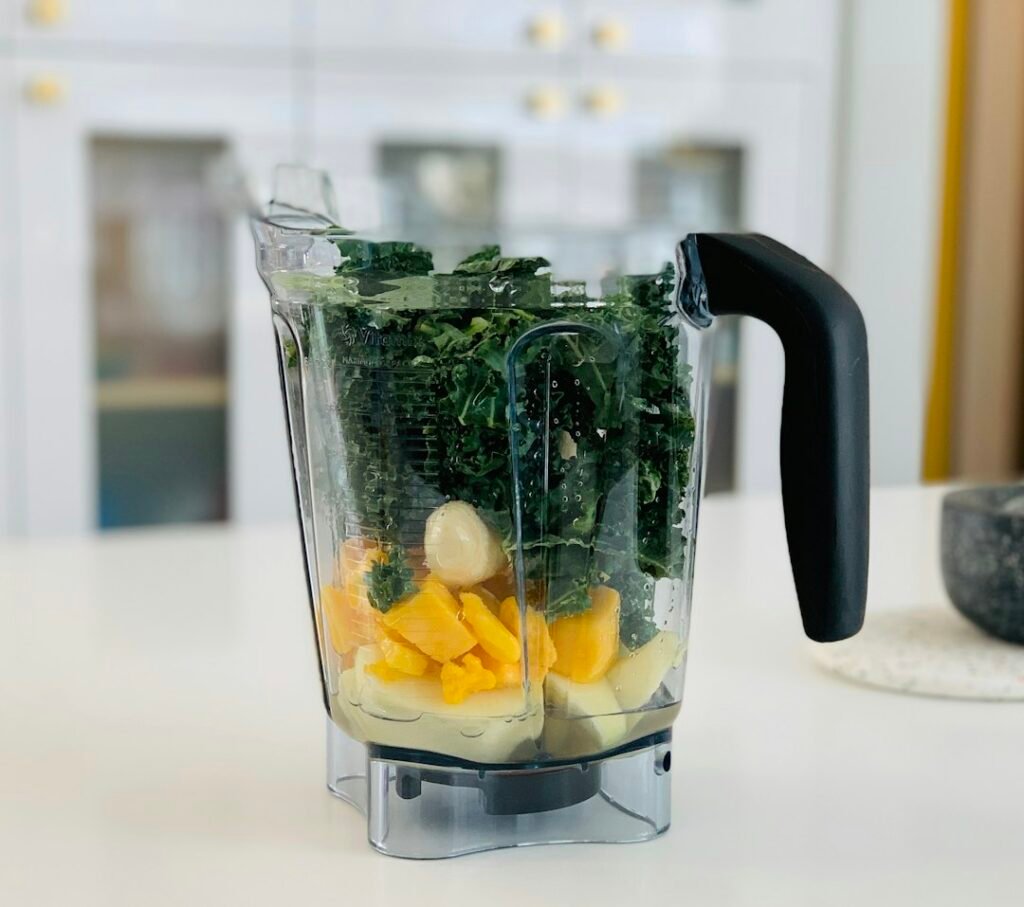
Illustrative smoothie photo by Andrea Niosi on Unsplash. It is not a photograph of our product testing.
Pingback: What Can You Make in a Mini Food Processor?
Pingback: Mini Food Processor Not Chopping Evenly? Safe Checks
Pingback: Personal Blender vs Full-Size Blender: Which Fits?
Pingback: How to Clean a Mini Food Processor Safely