Updated September 2026
Affiliate disclosure: As an Amazon Associate, we earn from qualifying purchases. KitchenFitly may receive a commission from the Amazon shopping links below.
Editorial approach: This comparison explains the two heating methods and their buying tradeoffs. It is not a hands-on appliance test. Check the exact product manual for cookware, electrical, clearance, and safety requirements.
In an induction cooktop vs electric hot plate comparison, induction is usually the better choice for frequent small-kitchen cooking: it responds quickly, heats compatible cookware directly, and offers a smooth surface to clean. A conventional resistance hot plate makes more sense when the purchase budget is tight, cooking is occasional, or keeping existing nonmagnetic cookware matters most.
Both use electricity. The difference is where heat is generated. Induction creates heat in suitable cookware; a resistance hot plate first heats a coil, solid plate, or radiant element, which then heats the pan. That distinction affects responsiveness, residual heat, and pan compatibility.
Fast decision
- Choose induction for daily meals, quick boiling, responsive adjustments, and a compact cooking station with compatible pans.
- Choose a resistance hot plate for occasional backup cooking and broad cookware compatibility at a lower initial cost.
- Check residence rules first if you live in a dorm or restricted rental. Neither technology is automatically permitted.
- Check the circuit before buying. A lower purchase price does not mean a lower electrical load.
Side-by-side comparison
| Factor | Portable induction | Resistance electric hot plate |
|---|---|---|
| Heating method | Electromagnetic energy heats compatible pan | Heated element transfers heat to pan |
| Cookware | Magnetic, flat base of suitable size | Broader compatibility; follow appliance instructions |
| Heat response | Usually quicker when settings change | Element retains heat after adjustment |
| Surface temperature | Still hot from the cookware | Heating surface itself becomes very hot |
| Cleaning | Usually smooth glass surface | Depends on coil, solid plate, or radiant design |
| Noise | Cooling fan and possible cookware vibration | Often quieter, depending on design |
| Upfront cost | Often higher, especially if pans need replacing | Often lower for a basic single burner |
| Best fit | Frequent everyday cooking | Occasional use and existing cookware |
What counts as an electric hot plate?
Here, “electric hot plate” means a conventional resistance appliance—not induction, even though induction also runs on electricity. Common versions include an exposed coil, a solid cast-iron plate, and an infrared or radiant element under glass.
These versions do not perform identically. A solid plate may hold considerable heat; a glass-topped radiant unit may be easier to wipe; an exposed coil can leave more places for spills to collect. Compare the actual design rather than treating every non-induction burner as one product.
Cooking speed and responsiveness
Induction generally changes its energy delivery quickly after an adjustment. A resistance element needs time to heat up and cool down. This matters when a sauce threatens to boil over or when moving from a strong boil to a gentle simmer.
However, pan construction still controls the result. A heavy cast-iron pan remains hot after induction power drops, so responsive electronics do not erase cookware’s stored heat. A poorly matched pan can also undermine induction performance.
For a useful comparison, cook the same quantity in suitable pans and measure the complete task. Comparing maximum wattage alone does not establish which appliance finishes faster or uses less energy.
Which works with your existing cookware?
Induction needs a magnetic base within the cooktop’s size limits. Cast iron generally works, while stainless steel varies. Traditional copper, plain aluminum, glass, and ceramic vessels usually need a purpose-built magnetic base to work directly.
A resistance burner does not require magnetic cookware, but flatness, stability, material approval, and temperature restrictions still matter. Do not assume every glass vessel can sit on a hot plate simply because magnetism is unnecessary.
Before shopping, test existing pan bottoms with a magnet. Our induction cookware guide explains how to check the base, size, and product label.
Energy use and electricity costs
Induction’s direct heating can reduce wasted energy. The U.S. Department of Energy describes induction as more efficient than conventional smooth-top electric cooking. This does not guarantee a particular saving for every portable burner, pan, or recipe.
Use measured kilowatt-hours, not the power rating alone, to estimate running cost. A higher-wattage appliance can finish sooner; a lower-wattage appliance can run longer. The calculation is:
Cost = energy used in kWh × your electricity price per kWh.
If a session uses 0.5 kWh and your rate is an illustrative $0.20 per kWh, it costs $0.10. This is a calculation example, not a current tariff or measured product result. Read our portable induction wattage guide for planning examples.
Simmering: inspect the lowest settings
Maximum power gets attention, but low-heat control matters for oatmeal, eggs, melting butter, and sauces. Some portable induction units pulse at low levels, producing noticeable changes in small pans. Some resistance plates also cycle widely around the selected setting.
Look for a documented low-power range, understandable controls, and a manual that explains temperature mode. The displayed temperature may relate to a sensor beneath the surface, not the exact temperature of your food.
If gentle cooking dominates your routine, prioritize low-setting behavior and pan size over a very high advertised maximum.
Safety and residual heat
Neither option is safe to touch immediately after cooking. An induction surface can become hot through contact with cookware. A resistance surface contains the heated element itself and may remain hot well after switching off.
- Place the appliance on the stable, heat-resistant surface specified by its manual.
- Leave the required ventilation and wall clearances.
- Keep handles from extending over counter edges.
- Keep cables away from water and hot pans.
- Allow full cooling before cleaning or storing.
- Never rely on a timer, pan detector, or child lock as a substitute for supervision.
Do not cover cooling vents or place unapproved mats between a pan and an induction surface. Avoid using a cracked glass appliance or a unit with damaged wiring.
Electrical load: both need a suitable outlet
A hot plate and an induction cooktop can both be high-load appliances. Read the nameplate for voltage and rated input, and follow circuit instructions. A normal-looking plug does not prove that an outlet, adapter, or power strip can safely support the appliance.
Do not operate a kettle, toaster oven, microwave, and burner together on an uncertain shared circuit. Stop if breakers trip, connections become unusually warm, or plugs are loose or discolored. Have a qualified electrician evaluate electrical concerns.
Follow the appliance’s extension-cord restrictions. Do not bypass a grounded plug or use a lightweight cord to make a cooking station reach farther.
Cleaning, storage, and noise
A smooth induction surface is usually convenient for daily wiping, but abrasive tools can damage it. Clean only after cooling, using the manufacturer-approved method. A solid hot plate and an exposed coil may require different care and longer cooling time.
Induction often has a cooling fan that runs during cooking and may continue afterward. Some cookware can buzz or vibrate. Resistance hot plates often have fewer active cooling components, but clicking thermostats and other sounds can still occur.
For storage, include cable room and safe handling—not just the appliance footprint. If the burner must move after every meal, cooling time becomes a practical constraint.
Best choice for a small apartment
For frequent use, induction is our default recommendation when compatible cookware and a suitable circuit are available. It creates a convenient single-pan cooking station without requiring a permanent installed range.
Use our small-apartment induction buying guide to compare footprint, controls, and support. If you cook two components together, also read single vs double burner induction: a portable two-zone unit may share its total power.
Best choice for a dorm or occasional backup
Permission comes before technology. Residence policies may prohibit both options, limit wattage, or require cooking in a communal kitchen. Confirm the written rule before purchasing.
If cooking is permitted but rare, a basic resistance hot plate can be economical when existing cookware is suitable. If daily cooking is permitted, induction’s responsiveness may justify the additional purchase cost. Our dorm cooktop guide discusses these permission and storage constraints.
Shopping checklist
- Confirm the room or building allows portable cooking.
- Verify voltage, circuit requirements, and total electrical load.
- Inventory existing cookware and test magnetic bases.
- Measure operating space and ventilation clearance.
- Compare lowest settings, not only maximum power.
- Check warranty, manufacturer support, and return terms.
- Consider cooling time, noise, and storage handling.
our guide to the best compact induction cooktops or compare resistance hot plates on Amazon. Verify the exact product’s manufacturer documentation before ordering.
Frequently asked questions
Is induction electric?
Yes. Induction uses electricity to create an electromagnetic field. A resistance hot plate uses electricity to heat its element. The distinction is the heating method, not the energy source.
Is a hot plate cheaper to run?
Not necessarily. Compare energy used for the same meal and quantity. Lower purchase cost or wattage does not guarantee lower running cost.
Which is better for cast iron?
Both may work if the pan and appliance instructions permit it. With induction, verify base size and weight limits, lift rather than slide the pan, and preheat according to cookware guidance.
Can either replace a full stove?
A single burner can handle many simple meals, but capacity, power, workspace, and the need for simultaneous pans limit it. Frequent multi-course cooking may require a broader setup.
Bottom line
Choose induction for regular cooking and responsive control when your cookware and electrical setup suit it. Choose a resistance hot plate for occasional use and a lower initial investment when retaining approved nonmagnetic pans matters.
Whichever you choose, compatibility, room rules, electrical capacity, and safe operating space should guide the purchase before the advertised wattage or price.
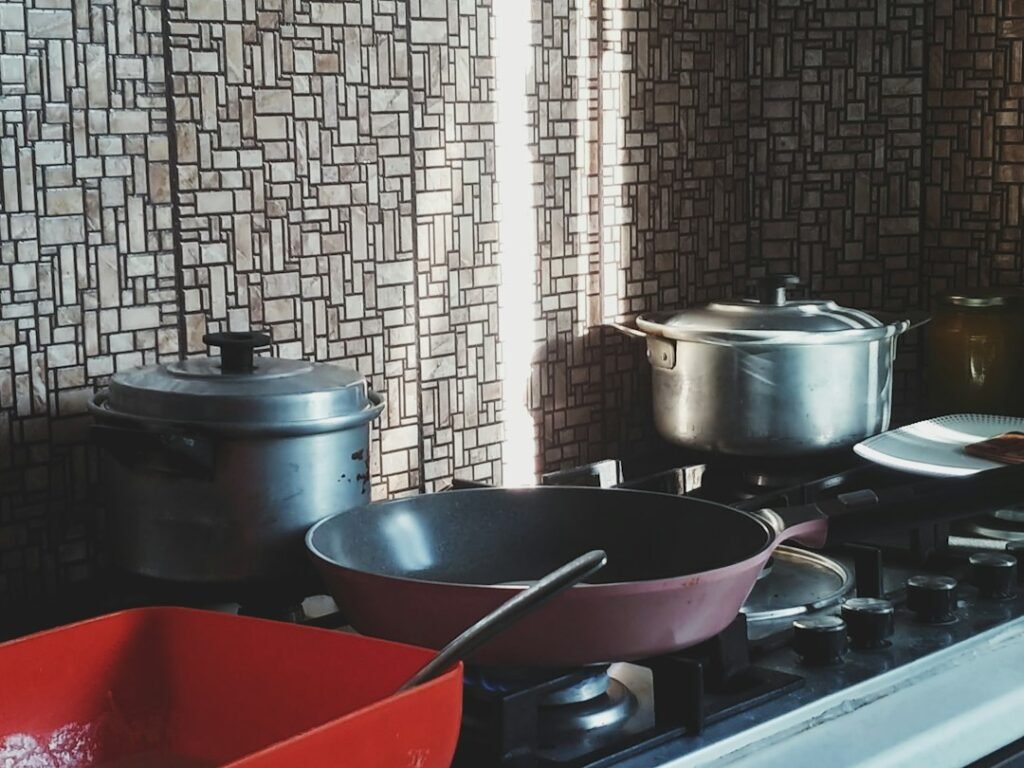
Illustrative cooktop photo by Henry Kobutra on Unsplash; not a side-by-side product test.
Sources
- U.S. Department of Energy: Induction cooking
- GE Appliances: Induction cookware compatibility
- CPSC: Extension-cord safety
Featured photo by Mazda Mehrad on Unsplash.
Pingback: Best Induction Cooktop for Small Apartments | KitchenFitly