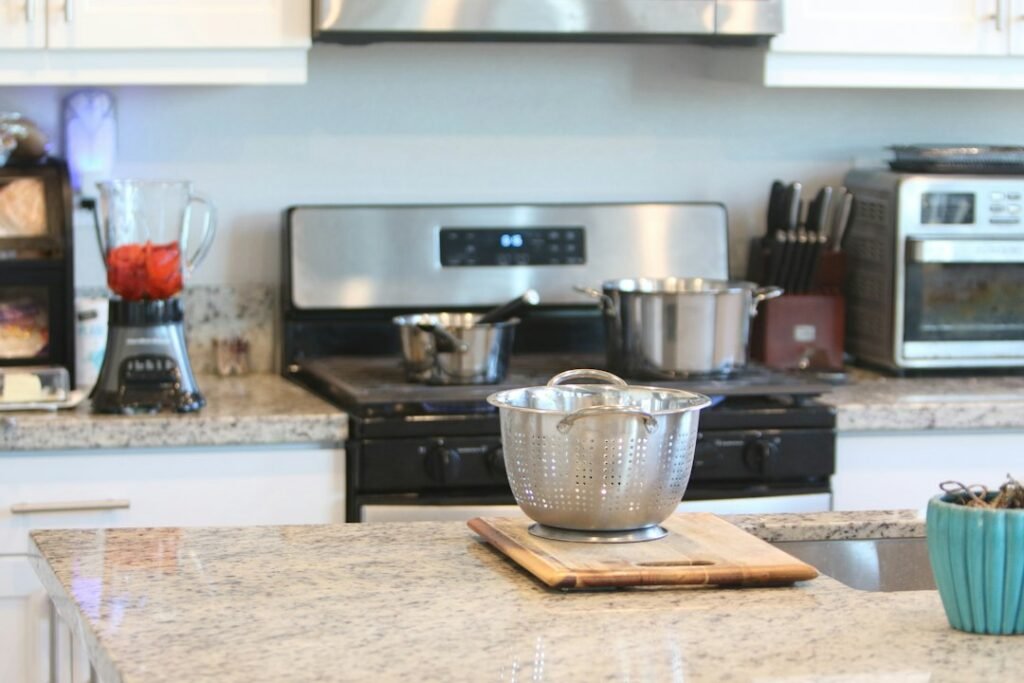
A safe countertop-appliance setup starts with the exact model manual, a suitable outlet, a stable dry surface, adequate operating clearance, and active supervision whenever the task requires it. In a small apartment, limited space makes cord routing, heat clearance, water exposure, and crowded counters especially important.
Affiliate disclosure: As an Amazon Associate, we earn from qualifying purchases. Some links on this site may be affiliate links, at no additional cost to you.
This checklist is general safety information, not electrical, fire, building-code, or product-specific advice. Requirements differ by appliance, apartment, and location. Follow the manufacturer’s current instructions, building rules, and local requirements. Stop using damaged equipment and seek qualified assistance when the setup is uncertain.
Quick countertop-appliance safety checklist
- Read the manual for the exact model before first use.
- Confirm that the appliance matches the local electrical supply and outlet.
- Place it on a stable, level, dry, heat-suitable surface.
- Follow the stated rear, side, and overhead clearances.
- Keep cords away from water, heat, sharp edges, and walkways.
- Do not overload outlets, adapters, or extension cords.
- Keep combustible items away from hot appliances.
- Stay present during cooking and heating as instructed.
- Keep children and pets away from hot surfaces, cords, and moving parts.
- Unplug safely when required and before permitted cleaning or inspection.
- Stop use for smoke, sparks, burning odor, repeated tripping, damage, or unusual overheating.
1. Start with the exact manual and rating label
Before placing the appliance, identify the exact model number and read its use-and-care guide. Similar-looking models can have different power ratings, ventilation needs, controls, cleaning instructions, and approved uses. Save the manual or its official link so it is available later.
Check the voltage, frequency, wattage, plug, and any grounding instructions on the rating label. Do not assume that an appliance purchased in another country is compatible with the apartment’s electrical supply. A plug adapter changes the physical connection; it does not automatically make voltage, frequency, grounding, or power requirements compatible.
Use only manufacturer-approved components and attachments for the exact model. Do not bypass a lid switch, interlock, thermal protection, or other safety feature.
2. Choose a stable and suitable operating surface
Set the appliance on a firm, level, dry surface that can support its operating weight. Include the weight of water, ingredients, cookware, and removable containers—not only the empty appliance.
Keep the unit back from the counter edge so it cannot be pulled or knocked down. Make sure all feet rest securely on the counter. Do not operate an appliance on a soft cloth, unstable cart, bed, floor, or improvised shelf unless the manufacturer specifically permits that surface and location.
Some appliances create heat, steam, vibration, or condensation. Protect nearby finishes only in ways allowed by the manual. Never place cardboard, paper, fabric, plastic packaging, or another unapproved material beneath a hot appliance as an improvised heat shield.
3. Measure operating clearance, not only storage space
A compact appliance may need more room while operating than while stored. Allow for open lids, doors, baskets, handles, steam paths, ingredient loading, and safe hand access. Follow every clearance figure in the manual rather than relying on a universal rule.
Upper cabinets deserve special attention. Steam and heat can affect surfaces above an appliance, and an open lid may strike the cabinet. Do not slide a hot or running appliance into a tight cavity. Our counter-space measuring guide provides a full width, depth, height, cord, and workflow method.
Keep items that can burn away from cooking and heating equipment. The U.S. Fire Administration’s cooking-fire guidance emphasizes staying attentive and keeping the cooking area clear. Use its advice alongside the exact appliance manual and local fire guidance.
4. Use outlets and cords carefully
Use the outlet arrangement required by the manufacturer. For cooking appliances, official fire-safety guidance commonly recommends a direct wall connection rather than an extension cord. The U.S. Fire Administration also advises unplugging small appliances when they are not in use. See its appliance and electrical fire-safety guidance.
Do not overload an outlet, power strip, adapter, or extension cord. The U.S. Consumer Product Safety Commission warns that unsuitable extension cords can present fire or electric-shock hazards. Follow the appliance instructions and seek an electrician or building management when the available outlet is unsuitable.
Route the cord where it cannot touch hot surfaces, hang within a child’s reach, cross a sink, become trapped under the appliance, or create a trip hazard. Never pull the cord to unplug; hold the plug as directed. Do not handle a plug with wet hands.
5. Separate electricity from water
Keep electrical bases, plugs, cords, and ventilation openings dry. Do not place an electrical appliance where splashes from the sink are likely or where it could fall into water. A compact apartment counter may put the sink unusually close, so choose the operating position before plugging in.
If liquid enters an electrical base or an appliance falls into water, do not reach into the water or continue testing it. Disconnect power only if that can be done safely and follow emergency or professional guidance appropriate to the situation.
“Dishwasher-safe” applies only to the parts identified by the manufacturer. It never automatically includes the motor base, cord, plug, heating body, or all removable components.
6. Stay present during cooking and heating
Do not leave active cooking or heating equipment unattended when the manual or task requires supervision. Remain nearby, use the correct controls, and stop at the stated operating limits. Do not continue running an appliance because the result is taking longer than expected.
Keep a clear path to the controls and plug. Do not stack objects in front of the appliance or cover ventilation openings. Avoid loose sleeves, towels, paper, packaging, curtains, and other combustible materials near heat.
If oil or grease is involved, follow the exact appliance and fire-safety instructions. Do not put water on a grease fire. Leave the apartment and call emergency services when a fire cannot be handled immediately and safely according to official guidance.
7. Protect children, pets, and other residents
Position hot surfaces, sharp parts, cords, and controls outside children’s reach. Do not let a cord hang over the counter edge. Explain to other residents when an appliance is hot, cooling, or temporarily placed somewhere unusual.
Pets can pull cords, bump carts, or reach food. Keep them out of the active cooking area. Do not leave a cooling appliance on the floor or in a narrow passage.
In shared apartments, establish a simple rule: the person who turns on the appliance remains responsible for it until it is switched off, safely unplugged when appropriate, and left to cool in a suitable place.
8. Check the appliance before every use
Look for a cracked plug, frayed or pinched cord, loose connection, damaged housing, broken lid or lock, missing foot, warped container, corrosion, or residue near ventilation openings. Check cutting parts without touching sharp edges.
Stop using the appliance if you notice smoke, sparks, a burning electrical smell, repeated breaker or protective-device operation, melted material, unusual overheating, a damaged safety feature, or a sudden major change in sound or performance. Do not tape a damaged cord, bypass a lock, open a motor housing, or attempt an internal repair unless you are qualified and the manufacturer provides an authorized procedure.
Check recalls and safety notices through the manufacturer and the relevant authority. In the United States, the CPSC recall database is an official starting point.
9. Clean only after safe shutdown
Stop operation, wait for all movement to finish, unplug when instructed, and allow hot parts to cool before cleaning. Remove components in the sequence shown in the manual. Keep sharp blades visible and separate from other dishes.
Use only the approved cleaning method and products. Do not immerse the electrical base or direct running water into controls, vents, or connections. Dry parts as instructed before reassembly or storage.
Clean food-contact surfaces and prevent cross-contamination. The U.S. government’s four food-safety steps emphasize cleaning, separating raw foods, cooking appropriately, and chilling promptly.
10. Store safely after cooling
Let the appliance cool in the location and manner specified by the manufacturer. Do not place a hot appliance inside a cabinet, against stored items, or under a cover. Empty water reservoirs, crumb trays, oil containers, or food residue as directed.
Store cords without tight bending, crushing, or wrapping them around hot or sharp parts. Keep blades and cutting attachments protected. Heavy appliances should be stored where they can be lifted securely without reaching above shoulder height or twisting in a narrow space.
Apartment-specific placement check
| Area | Check | Avoid |
|---|---|---|
| Counter edge | All feet secure and controls reachable | Overhang and dangling cords |
| Under cabinets | Manual-approved overhead clearance | Trapped steam and blocked lids |
| Near sink | Dry location with protected cord route | Splash zones and wet plugs |
| Near stove | Separation required by instructions | Heat, flames, grease, and crowded handles |
| Shared walkway | Stable position away from traffic | Carts or cords that create trip hazards |
| Storage cabinet | Cool, dry, accessible shelf | Storing while hot or crushing the cord |
When to stop immediately
- Smoke, flame, sparks, or burning odor.
- Electric shock, tingling, or a visibly damaged plug or cord.
- Repeated breaker, fuse, or protective-device operation.
- Liquid inside an electrical base.
- Broken interlock, cracked housing, or loose heating component.
- Uncontrolled overheating, unusual noise, or sudden malfunction.
Move away from immediate danger and contact emergency services when necessary. Do not touch, move, or reconnect a suspect appliance until qualified guidance says it is safe.
Frequently asked questions
Can I use a power strip for a countertop appliance?
Do not assume so. Follow the exact appliance instructions and the rating and installation requirements for the outlet arrangement. Cooking and high-power appliances may require direct wall connection.
Can I run an appliance under an upper cabinet?
Only if the manufacturer permits the location and all clearance, ventilation, heat, and steam requirements are satisfied. Storage fit alone is not enough.
Should I unplug every small appliance after use?
Follow the manual. USFA advises unplugging small appliances when they are not being used. Allow hot equipment to cool safely and never pull on the cord.
What if the cord becomes warm?
Stop use and disconnect safely. Do not continue testing or substitute an unverified cord or adapter. Contact the manufacturer, building management, or a qualified professional as appropriate.
Bottom line
In a small apartment, safe placement matters as much as appliance size. Use the exact manual, a suitable electrical connection, stable dry counter space, required clearance, careful supervision, and proper cleaning. When damage, overheating, smoke, liquid entry, or repeated electrical problems appear, stop using the appliance rather than improvising a repair.
Before adding another appliance, use our small kitchen appliance checklist to decide whether it deserves the space and maintenance required.
Pingback: How to Create Appliance Zones in a Small Kitchen
Pingback: Appliance Capacity for One or Two People: A Guide