A food dehydrator is the more direct choice for regular drying; an oven may suit occasional drying only when it can meet the food’s required conditions and its manufacturer permits the method. In a small kitchen, compare the complete setup: operating space, tray capacity, storage, cleanup, and how long the appliance will occupy your cooking area.
Do not assume an oven’s lowest setting, a convection fan, or an air fryer’s “dehydrate” label makes it suitable for every food. Start with a research-based drying procedure and the instructions for your exact appliance.
This is a buying and planning comparison, not a hands-on drying test or a preservation recipe. We do not claim measured energy savings, fixed drying times, or guaranteed shelf life.
Affiliate disclosure: As an Amazon Associate, we earn from qualifying purchases. Some shopping links below are affiliate links.
Food dehydrator vs oven: quick comparison
| Decision point | Food dehydrator | Oven |
|---|---|---|
| Intended purpose | A dedicated appliance for supported drying tasks. | Drying suitability depends on the model and permitted method. |
| Temperature control | Check the adjustable range and instructions. | Check whether it can maintain the required conditions. |
| Air circulation | Typically uses a fan and vents as part of the drying design. | Do not infer drying suitability from convection alone. |
| Storage | Needs space for the unit, trays, and accessories. | No separate machine if you already own a suitable oven. |
| Cooking availability | Leaves the oven available, but occupies another operating location. | Occupies the oven during the drying session. |
| Batch size | Compare usable tray area and loading instructions. | Compare permitted racks, trays, and arrangement. |
| Cost | Equipment, accessories, and actual energy use. | Possible accessory costs and actual energy use. |
The table identifies questions to check. It does not establish that every dehydrator outperforms every oven.
What makes a dehydrator different?
The National Center for Home Food Preservation’s dehydrator guidance describes appliances using heat, a fan, and vents for circulation. It also identifies temperature regulation, tray construction, and airflow design as useful selection considerations.
Check those features against your intended foods. A dial with a wide range is useful only if the appliance supports the procedure you plan to follow. A timer may help manage the session, but it does not establish that the food is adequately dried.
For a small kitchen, look beyond the external size. A compact unit can fit neatly in storage yet provide too little usable tray area for your normal batch. Conversely, a larger unit may be unnecessary if you will only prepare modest quantities occasionally.
When can an oven be a reasonable option?
Oven drying is a recognized method in appropriate circumstances. Oregon State University Extension’s drying guide covers fruits and vegetables using a dehydrator or an oven and directs readers to food-specific preparation, drying, and storage instructions.
Before relying on your oven, check its manual for drying or dehydration guidance. Compare the permitted method with the research-based procedure for the food. If the oven cannot provide the necessary conditions, do not compensate by guessing a higher temperature or shorter time.
Do not prop the door open, override switches, or improvise ventilation unless the manufacturer explicitly permits the intended method. General food-preservation advice cannot authorize a setup prohibited by your appliance instructions.
If you cannot reconcile the procedure with the oven’s permitted operation, ask the manufacturer or a food-preservation extension service. Choosing another suitable method is better than forcing the oven to perform an unsupported task.
Choose the food before choosing the machine
List what you expect to dry: a particular fruit, vegetable, herb, or another supported food. Then find the appropriate authoritative procedure. The ingredient determines important preparation and drying requirements; the appliance is a means of meeting them.
Do not treat all foods as interchangeable. A method suitable for one fruit does not automatically apply to vegetables, meat, or a mixed recipe. Avoid using an appliance’s preset name as the entire preservation instruction.
This article does not provide a jerky method. If meat or poultry is your goal, obtain a validated procedure with the required food-safety steps before selecting equipment. Do not assume making something visibly dry is equivalent to making it safe.
Start with one manageable, supported project. It is easier to assess whether drying fits your routine when you are not simultaneously learning several preparation and storage methods.
Compare usable tray area, not tray count alone
Five small trays and five large trays do not provide the same working area. Check dimensions, usable space, and the prescribed loading arrangement. Include any restrictions on spacing, thickness, or stacking from the procedure and appliance instructions.
Also check whether the model requires tray rotation or other attention during use. An appliance marketed as simple may still need a routine that does not suit your schedule.
For an oven, verify compatible racks and trays rather than assuming every shelf can be loaded. For a dehydrator, verify which accessories are included and which are required for the foods you intend to make.
Do not overload a small machine to avoid a second batch. If ordinary quantities require repeated sessions you will not realistically complete, reconsider the size or the project.
Small-kitchen space: operating and storage are different
Measure the proposed operating location using the manual’s requirements, including clearances and ventilation. A machine fitting inside a cupboard does not mean it can run there.
Check assembled height, footprint, cord routing, and access to trays. Keep the setup away from locations where spills could reach electrical parts, and use only the permitted supporting surface.
Then measure storage for the unit and all accessories. Can you retrieve it without unpacking the entire cabinet? Will washed trays fit on your drying rack? These everyday details can decide whether the appliance gets used.
Using an existing oven avoids storing another motorized unit, but drying occupies an appliance you may need for dinner. Plan that conflict before starting a lengthy session. A dedicated dehydrator solves that conflict only if its own operating area remains practical.
Time and attention: avoid a universal promise
Drying duration depends on the food, preparation, loading, appliance, and conditions. Use the procedure’s instructions and doneness criteria rather than promising that every batch will finish in a fixed number of hours.
Before starting, identify the checks the process requires and whether your schedule allows them. Follow the appliance’s rules about supervision and permitted operation. Do not interpret a timer or automatic shutoff as permission to ignore those rules.
Record your project details for future planning: food, preparation, loading, settings, and the observations required by the procedure. A useful record helps you organize later sessions; it does not replace the authoritative method or validate an improvised one.
Energy costs: compare actual consumption
A lower wattage rating does not, by itself, prove a lower cost per batch. Runtime, cycling, and the amount successfully dried all affect the comparison.
Illustrative calculation: if an appliance consumes an average of 0.3 kW over eight hours, that is 2.4 kWh. At a hypothetical electricity rate of $0.20 per kWh, the cost is $0.48. These are example inputs, not measured performance or current electricity prices.
Use safe, appropriate measurement or reliable appliance information for actual consumption. Do not assume the rating label equals continuous average use. Compare like-for-like successful batches, not a full load in one machine against a tiny load in another.
Include equipment and accessory costs too. If drying is mainly a hobby or convenience purchase, describe that benefit honestly rather than assuming it will pay for itself.
Preparation, cleaning, and storage still matter
Follow the food-specific instructions for preparation and any required pretreatment. Do not skip a step because the appliance advertises powerful airflow.
After use, disconnect power and clean only as the manual directs. Check dishwasher permission individually for trays and accessories. The electrical base is not a washable food container; do not immerse it or rinse it under a tap.
Use the preservation procedure’s criteria for adequate drying, cooling, packaging, and storage. Do not package an unfinished batch and assume a tighter seal will correct it.
Vacuum sealing is a separate packaging question, not a substitute for proper drying. Our vacuum sealer vs freezer bags guide explains why packaging benefits must remain separate from food-safety claims.
Which should you choose?
Consider your existing oven first if drying is occasional, its instructions permit a suitable method, and it can meet the chosen food’s procedure without disrupting essential cooking.
Consider a dedicated dehydrator if drying is a recurring activity, you have a permitted operating location, and the model’s temperature controls, usable tray area, and cleaning routine match your projects.
Delay the purchase if you do not yet know what you will dry or how often you will use it. Choose a specific project and read its procedure before buying accessories.
Our small food dehydrator guide can help build a shortlist. You can also read our guide to the best small food dehydrators. Verify the exact model’s manual, supply requirements, included trays, and intended uses before ordering.
Affiliate links: as an Amazon Associate, KitchenFitly earns from qualifying purchases. Models come from our research-based guides; check the exact listing and manual before buying.
- Compact top pick: COSORI Premium Mini. The top pick in our small food dehydrator guide. Check it on Amazon →
- Also on our shortlist: NESCO FD-41B. Another compact option from the same guide. Check it on Amazon →
Full guide: best small food dehydrators.
Frequently asked questions
Can any oven dehydrate food?
No. Check whether the appliance’s permitted operation can meet the food-specific procedure. Do not assume the lowest setting is suitable.
Does a convection fan make an oven equivalent to a dehydrator?
No. Temperature, airflow, loading, and permitted operation still need checking. A fan alone does not establish suitability.
Can an air fryer replace a dehydrator?
Possibly for specific supported tasks, but check the exact model and procedure. A preset does not automatically cover every food or batch.
Will dried food always be shelf-stable?
Do not assume that. Follow the validated food-specific instructions for processing and storage, including any restrictions.
Bottom line
Choose a drying procedure first, then select equipment that can meet it safely. A suitable oven may be enough for occasional projects; a dedicated dehydrator may better fit regular use. Measure the whole setup and compare real costs—not just tray counts, presets, or wattage.
If a dedicated unit is the better fit for regular drying, see our picks in the best small food dehydrator for small kitchens guide.
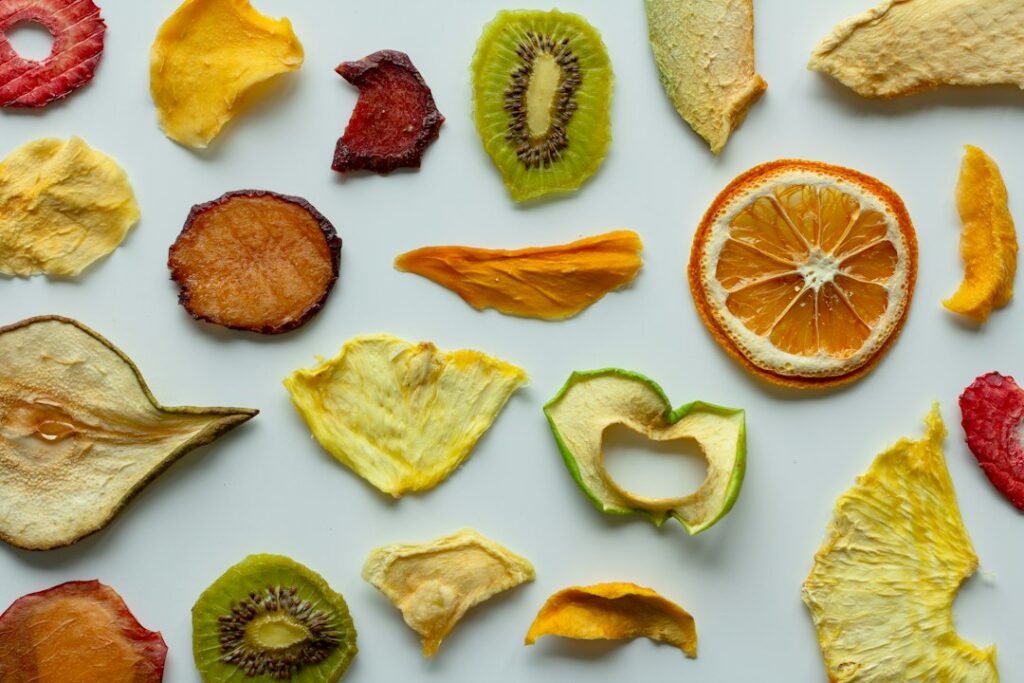
Illustrative dried-fruit photo by K8 on Unsplash. It is not a photograph of our drying tests.
Pingback: Best Small Food Dehydrator: 4 Compact Picks (2026)