Updated October 2026.
A rice cooker is one of the easiest appliances to keep clean—if you treat the nonstick inner pot gently and do not let starchy water dry onto the lid and steam vent. Done right, cleaning takes a few minutes after each use and keeps your rice tasting fresh. Here is the method that protects the coating and clears the hidden spots most people miss.
What You’ll Need
- Mild dish soap and a soft sponge or cloth
- A damp microfiber cloth for the base and exterior
- White vinegar (for odors and mineral buildup)
- A soft toothbrush or small brush for the steam vent
How to Clean a Rice Cooker, Step by Step
1. Unplug it and let it cool. Never clean a rice cooker while it is hot or plugged in. Let the pot and heating plate come down to room temperature.
2. Wash the inner pot. Remove the nonstick pot and hand-wash it with warm water, mild soap and a soft sponge. If rice is stuck, soak it for 10–15 minutes first rather than scraping. Rinse and dry it completely.
3. Clean the lid and inner lid. Many cookers have a removable inner lid or a condensation collector—take it off and wash it, because trapped starch here causes smells. Wipe a fixed lid with a damp cloth.
4. Clear the steam vent. Starchy spray dries inside the vent cap. Pop it off if it detaches, rinse it, and use a soft brush to clear any residue so steam flows freely.
5. Wipe the heating plate and sensor. With the pot removed, wipe the metal heating plate in the base with a barely damp cloth. Food specks here create hot spots and uneven cooking; never use abrasives or submerge the base.
6. Wipe the exterior and dry everything. Clean the housing and control panel with a damp cloth, dry the outside of the inner pot before returning it (a wet pot bottom can corrode the plate over time), and leave the lid open to air out.
Caring for the Nonstick Inner Pot
The coating is what makes a rice cooker effortless, so protect it:
- Use silicone, wood or plastic utensils—never metal spoons that scratch the surface.
- Skip steel wool, scouring powder and abrasive pads.
- Only put the pot in the dishwasher if the manual specifically says it is dishwasher-safe; many coatings degrade faster with repeated dishwasher cycles.
- Stack carefully in storage so nothing scrapes the inside.
A well-cared-for pot lasts years; if the coating eventually chips or peels, many brands sell replacement pots. If yours is beyond saving, our picks for the best rice cooker for one person and the smallest rice cookers highlight models with durable, easy-clean pots.
Removing Odors and Mineral Buildup
If rice starts to smell musty, odor is usually trapped in the inner lid, gasket or vent. Wash those parts thoroughly and let them dry fully. For a deeper refresh, run a cycle with water and a few tablespoons of white vinegar, then run a plain-water cycle and wipe dry. The same vinegar approach removes the chalky mineral spots that hard water can leave on the pot and plate.
How Often Should You Clean It?
Wash the inner pot, inner lid and vent after every use. Wipe the heating plate and exterior weekly, or any time you see residue. Do the vinegar refresh monthly if you have hard water or cook often. Regular light cleaning is far easier than removing baked-on buildup later.
Frequently Asked Questions
Can you put a rice cooker pot in the dishwasher?
Only if the manufacturer says it is dishwasher-safe. Many nonstick pots last longer with gentle hand-washing, because repeated dishwasher cycles and harsh detergents wear the coating faster.
How do I get stuck rice off the bottom?
Soak the pot in warm, soapy water for 10–15 minutes so the rice softens, then wipe it away with a soft sponge. Avoid scraping with metal, which scratches the nonstick surface.
Why does my rice cooker smell?
Odor usually hides in the inner lid, gasket or steam vent. Remove and wash those parts, dry them fully, and run a water-and-vinegar refresh cycle if the smell lingers.
Can I put water in the base to clean it?
No. Never immerse the base or let water into the housing. Wipe the heating plate and exterior with a barely damp cloth only.
Shopping for an easy-to-clean model for a tight kitchen? See our picks for the best rice cooker for a small apartment, and read how we assess cleaning and durability on our How We Review page.
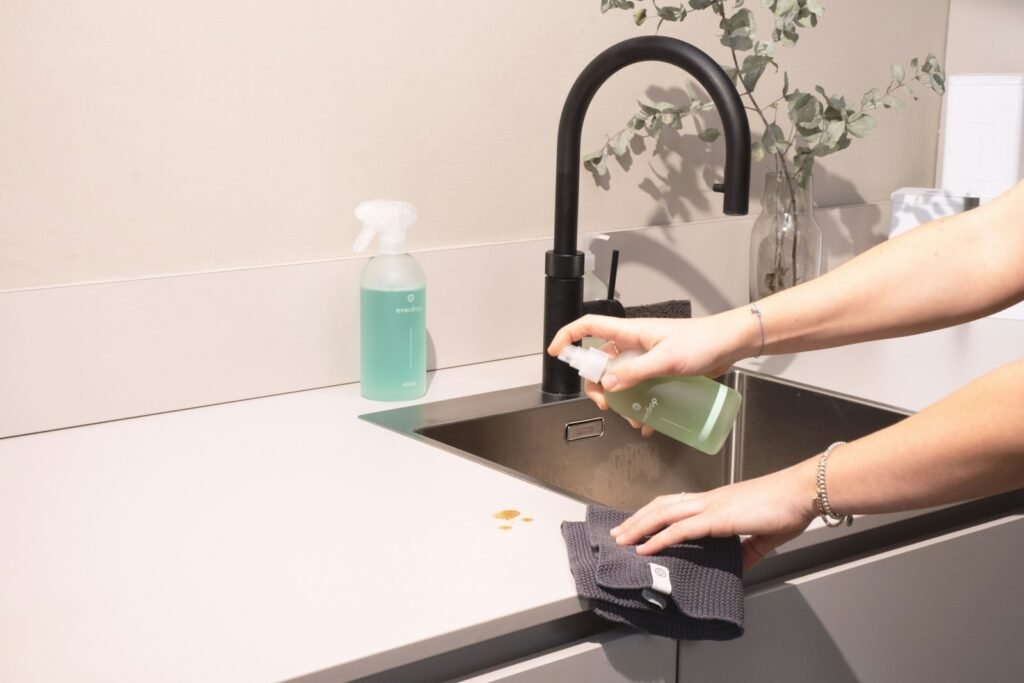
Featured photo by everdrop GmbH on Unsplash.